Kids & Family Counseling
Big feelings are part of growing up — but when a child is stuck in fight, flight, or shutdown more often than not, the whole family feels it. I work with children, teens, and families navigating school stress, behavioral struggles, and the ripple effects of a dysregulated nervous system, using play, creative expression, and family-systems work to help kids — and the adults around them — find their footing again.
What we might work on together: emotional regulation and coping skills, school-related stress and peer relationships, life transitions, and building a calmer home environment.
I started building Regulation Bins for my own two boys when they were still toddlers — and watching those tools become a real, working part of our routine is what convinced me they belonged in this work, not just in our house. I now make Regulation Bins for other families and classrooms too, so the same tools we use in session have a place to live at home, at school, and everywhere in between.
Why I Do This Work
Before I was a therapist, I was a teacher — thirteen years in the classroom. And what I saw, over and over, was a system built around an “average” student who doesn’t really exist. Kids are expected to fit inside a pretty narrow box, and most of them don’t. When that happens, I watched kids start to mold themselves into who they were expected to be, instead of staying connected to who they actually are — and slowly lose the ability to hear the parts of themselves that feel true and authentic.
As a teacher, I did everything I could within that system: building in emotional regulation where I could, calling out each kid’s real strengths, weaknesses, and unique capabilities, not just the ones that showed up on a rubric. But I was limited by the structure I was working inside of. Counseling was how I found a way to meet the bigger need I kept seeing — kids and families who needed more room than a classroom, or even a school system, could give them.
A lot of what parents are looking for is direction: a real understanding of what’s developmentally typical, how to show up for their child as the individual they are, and how to give that child genuine, undivided attention where they get to just be themselves. That’s a lot of what this work is.
How We Work Together
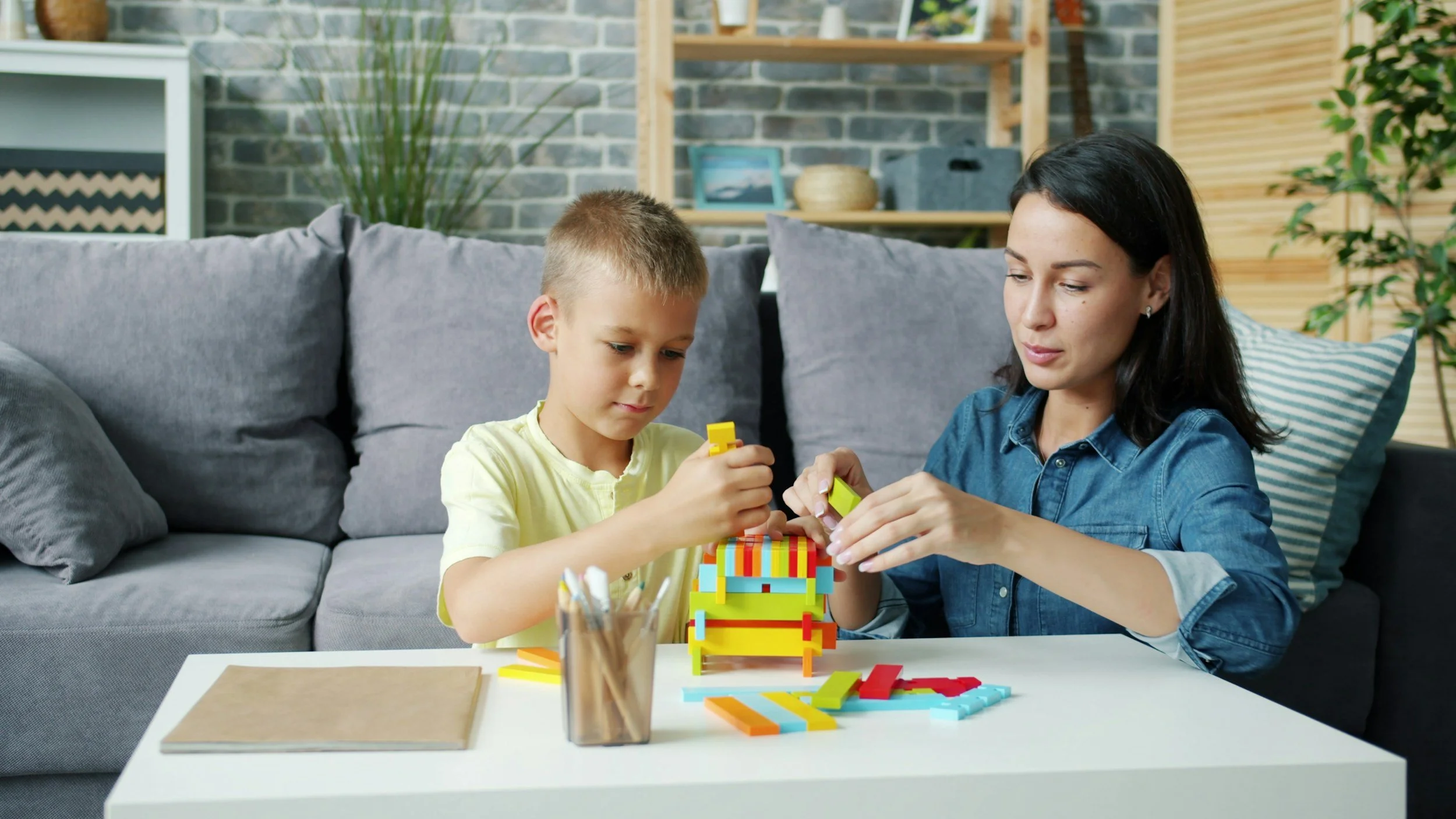
In session, I use a mix of direct and indirect play therapy. Indirect play therapy gives kids room to just play — a genuinely safe space for expression, which matters a lot as we start peeling back the layers a lot of kids have already built up by the time they get to me. Direct play therapy is more intentional, focused on building specific strengths, self-esteem, and positive qualities kids can carry with them outside of our sessions.
I also bring in creative arts therapy — thinking maps and art — as a way for kids to express themselves, process, and make connections in a way that works with how their brain actually makes sense of things, not against it.
Parents are part of this too. Including a parent in part of the work lets a kid feel that undivided attention — seen and heard — which builds the parent-child connection itself. It also gives me space with the parent, one-on-one, for real psychoeducation: what’s developmentally expected, what’s not, and what you can actually start implementing at home and at school.
This isn’t abstract for me, either. I’m a mom of two boys, and I’ve watched emotional regulation go from something we were “working on” to something that’s just part of our daily routine. I know what it looks like when it actually sticks, because I’ve built it into my own house — not just recommended it in a session.
A Free Guide for Parents
A free 24-page guide with practical, everyday tools to support a child with big feelings — at home, at school, and in counseling.